
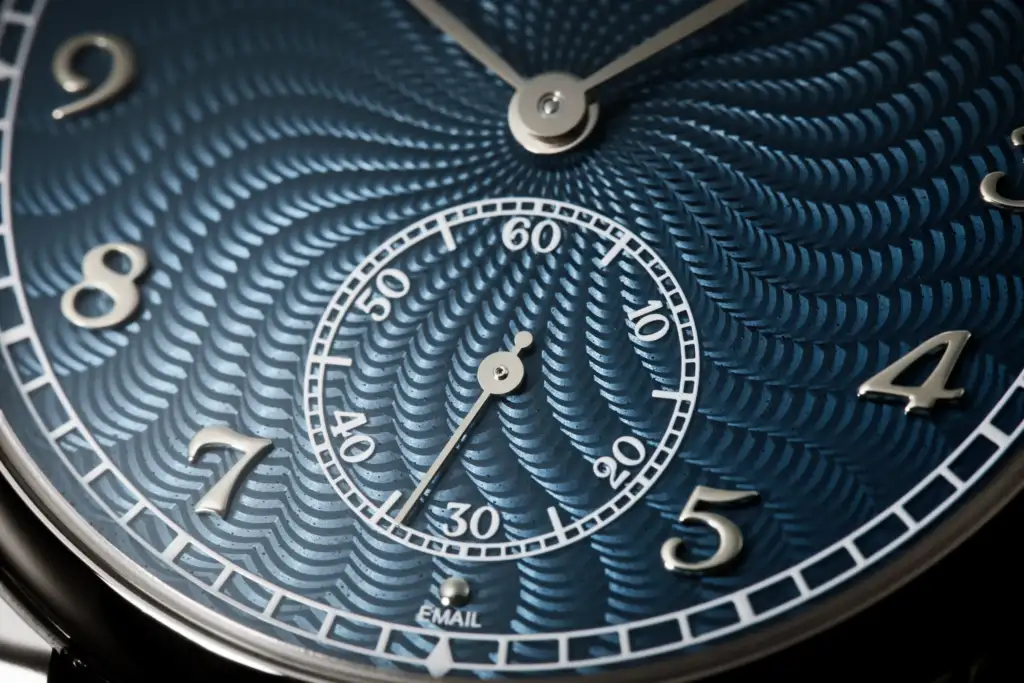
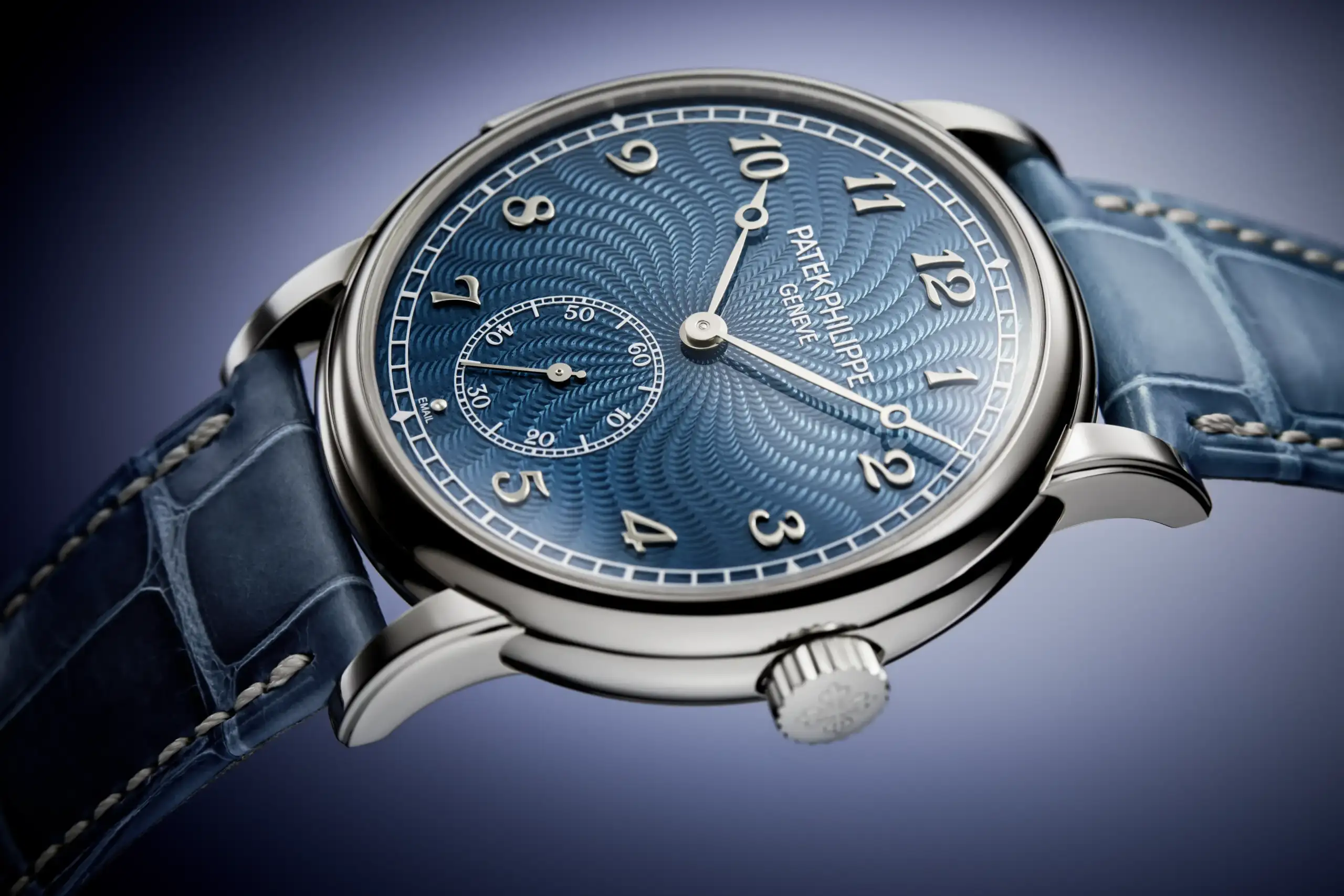
Guilloché transforms metal into a living canvas: the artisan manually guides the mechanisms to create delicate, precise patterns on dials, movements, and cases. This technique originated in the 16th century, reached its pinnacle in the 19th, and today remains a rare craft, passed down exclusively from master to apprentice.
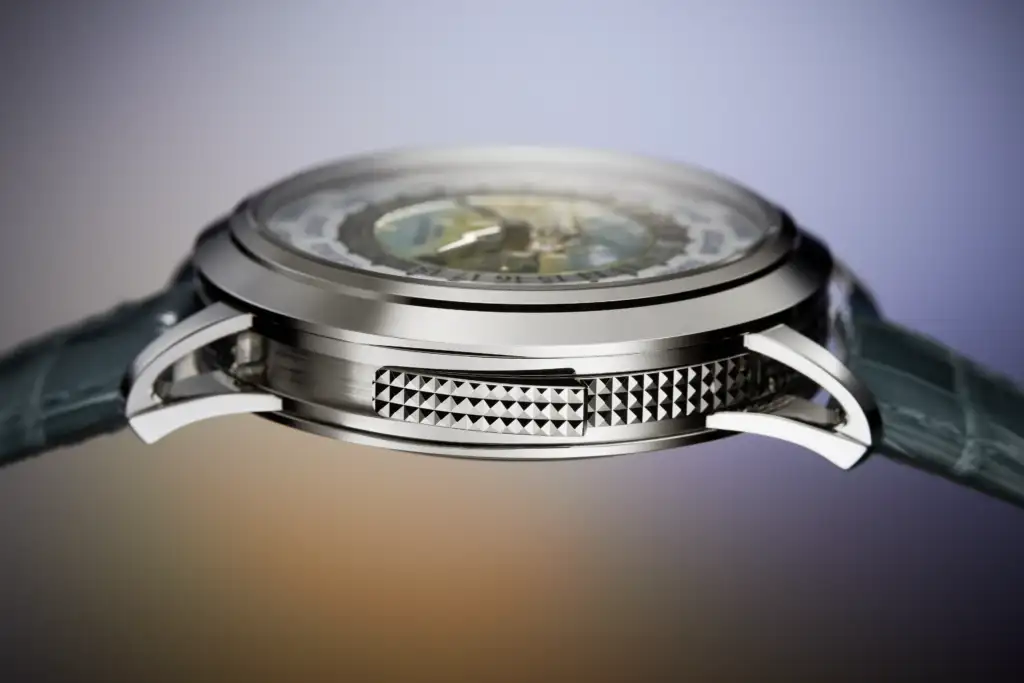
Using a straight-line mechanism, the artisan moves the components from left to right while cams dictate the rhythm and pattern formation. This technique allows the creation of perfectly straight lines at any angle and is used, for example, in the renowned Clous de Paris patterns that adorn the bezels of certain Calatrava models.
The turning engine enables the creation of patterns with smooth, curved lines. The artisan rotates the engine with one hand while guiding the graver with the other, achieving the highest level of precision. All turning engines at the manufacture are exact replicas of historical pieces preserved in the Patek Philippe museum, reflecting the brand’s deep respect for tradition and craftsmanship.